
Clarity before decoration
The user should know what matters, what changed, and what to do next without decoding the screen.
Product design + production finish for AI-built apps
Vibeship helps solo founders turn fast-built prototypes into clear, polished products people can understand, trust, and want to use.
Prototype → Product
Clarity, trust, and desire are what make people stay.
Clarity
SharpInterface
DistinctTrust
ResolvedDelivery
ReadyA prototype can work and still feel generic, confusing, or unfinished. The gap is rarely “more features.” It is a product hierarchy, a visual language, and hundreds of decisions that make the experience feel intentional.
The user should know what matters, what changed, and what to do next without decoding the screen.
A strong product feels related everywhere—type, spacing, states, motion, and behavior working as one system.
Empty states, failure recovery, responsive behavior, and speed are part of the design, not cleanup after it.
Vibeship is not advice from the sidelines. These are products built, redesigned, and shipped through the same decisions the studio brings to client work.
01Flagship product
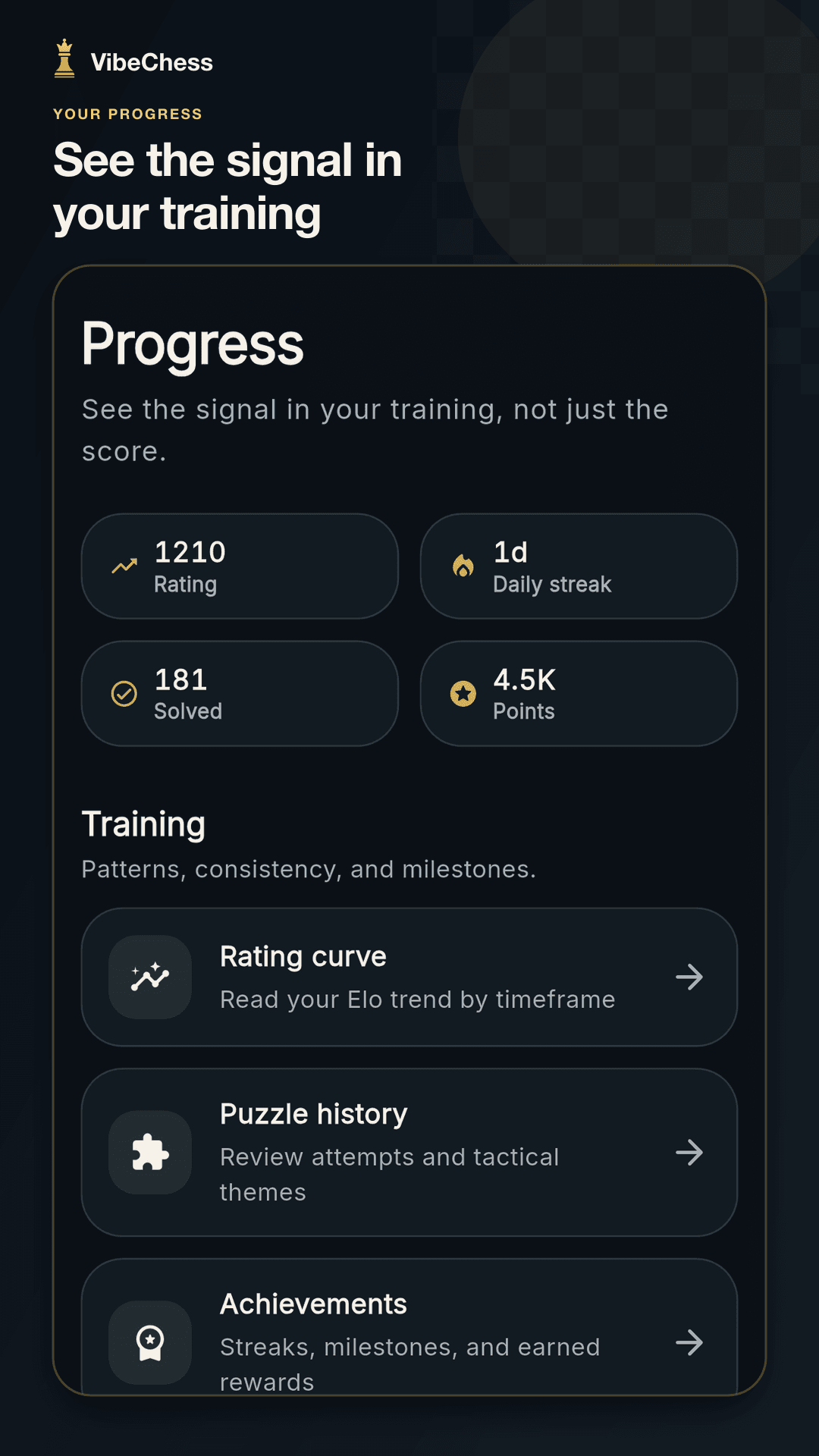
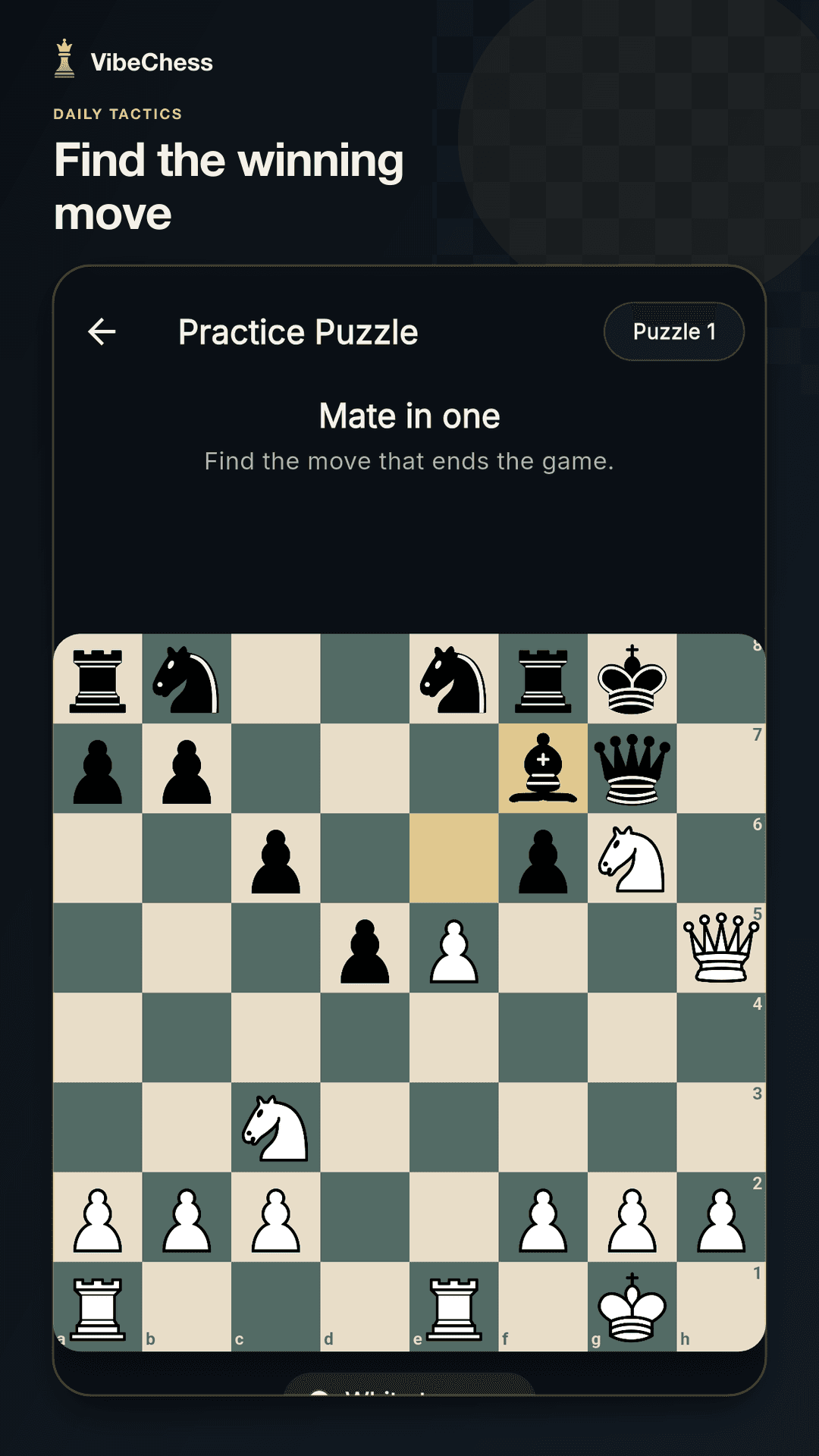
 VibeChess
A complete product refresh across technical foundations, identity, navigation, gameplay, progress, history, achievements, rankings, Premium, and store presentation.
Research workflow
Completed research sample
Historical review openConfidence distribution
Active ranking sampleRankings are reviewed with model confidence, universe filters, and completed outcomes as part of a repeatable research process.
02Research product
A credible research interface for quantitative US equity rankings, model confidence, momentum signals, subscriber access, and careful research-only positioning.
No giant discovery phase. Start with a real product, understand the gap, and expand the engagement only when the work justifies it.
Product diagnosis
A focused review of the product, interface, and production risks—with priorities, fix estimates, and a clear recommendation.
Focused fix sprint
A tightly scoped implementation sprint for the most important design or engineering issues uncovered in the diagnosis.
Product finish
For products that need a cohesive redesign, production engineering, responsive behavior, and release-ready polish.
The diagnosis is a decision document: what is getting in the way, why it matters, and the most useful direction to take next.
Ranked findings
The value is hidden behind setup before users feel momentum.
Let users experience the core loop first, then ask for trust.Every card asks for attention, so the primary action disappears.
Create one dominant action and move context into drill-downs.Loading, empty, and failure states feel like unfinished edges.
Give each state a clear next move and consistent visual language.Auth recovery and release configuration fail outside the happy path.
Close the trust gaps before expanding the feature surface.Share
Diagnose
Improve
The fit call is free. The $149 diagnosis is confirmed manually only after we know there is enough product surface to make the review useful.
The shortest path to a useful answer is usually a real product and a direct conversation.
Both, where they overlap. Vibeship focuses on the product layer that users experience: structure, interface, states, responsiveness, reliability, and the engineering needed to make the finish real.
No. The process is especially useful for vibe-coded prototypes because they become functional quickly, but any working product that needs clearer direction or a stronger finish can be a fit.
After a short fit call, the product is reviewed across UX, visual hierarchy, product states, and production risk. You receive ranked findings, concrete directions, fix estimates, and a recommended next step.
No. The diagnosis is useful on its own. If you continue with a focused Fix Sprint, the diagnosis fee is credited toward it.
A working demo, preview, repo, or walkthrough and an honest explanation of what feels wrong. You do not need polished documentation or a perfect brief.
Yes, when the product needs a cohesive system rather than a small patch. That work is scoped from the diagnosis so the redesign has a clear product rationale and a realistic implementation path.
Have something working?